Where Equipment Financing Leads Come From
Where equipment financing leads come from: dealer referrals, online applications, listings, MCA applicants and UCC data, plus the fields every lead needs.
By Lendable Leads EditorialUpdated 6 min read5 sources
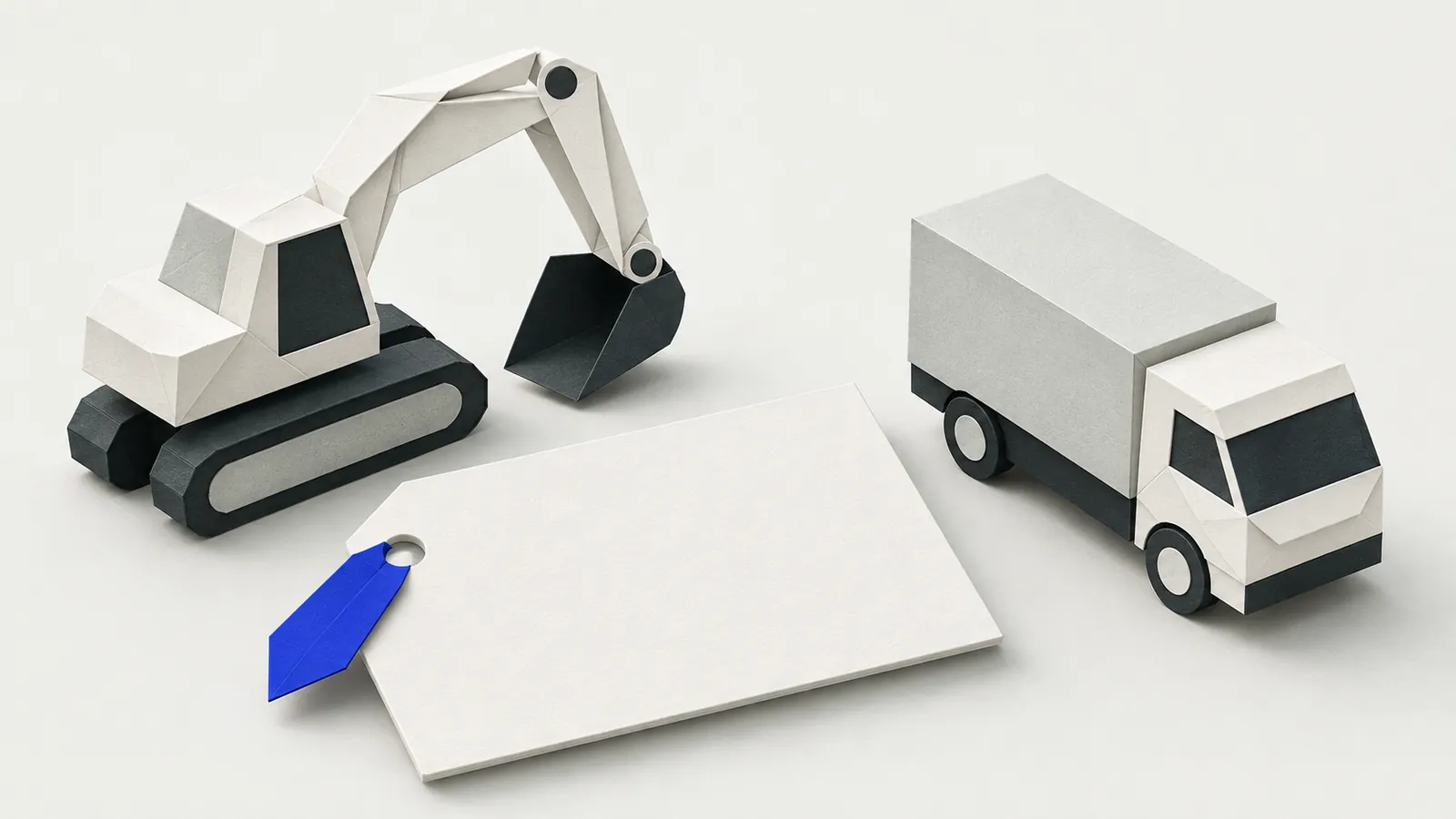
Equipment financing leads come from five main places: dealers and vendors who refer buyers at the point of sale, owners who apply online to finance a specific machine, inquiries on equipment listings, business funding applicants whose use of funds turns out to be equipment, and lists built from UCC filings. The source decides what the lead knows, how ready the owner is and who else is competing for the deal.
How equipment leads differ from other funding leads
Equipment financing is a different conversation from a cash advance. The owner wants a particular asset, the asset usually secures the deal, and the lender wants to know what it is, what it costs and who is selling it. This post is part of our lead sources series under the exclusive vs shared leads guide.
Demand is real and broad. In the Federal Reserve Banks' 2025 Small Business Credit Survey, 20% of firms that applied for a loan, line of credit or cash advance applied for an auto or equipment loan, and 11% of all employer firms sought a lease. Auto or equipment loan applicants had the highest full approval rate of the products the survey reports: 71% fully approved, 17% partially approved and 11% denied.
That approval profile shapes the lead. Because the asset backs the deal, a business that would struggle with unsecured credit may still fund on equipment, and the contest is often about rate, term and speed rather than whether anyone will say yes.
The five sources of equipment financing leads
| Source | What triggers the lead | What arrives with it | Owner's intent | Consent |
|---|---|---|---|---|
| Dealer and vendor referrals | Buyer gets a quote and asks about payments | Equipment, price, vendor, often a quote | High; purchase is chosen | Whatever the owner agreed with the dealer; confirm it covers you |
| Online applications | Owner searches for financing for a machine | Self-reported equipment, cost, timing, business facts | High to medium | Consent record from the form, if captured |
| Listing inquiries | Owner contacts a seller about a listed machine and asks about financing | One specific unit, often used | Medium; may be browsing | Depends on the listing site's form |
| Funding applicants with equipment use | MCA, loan or line of credit application where use of funds is equipment | Business facts, revenue, amount | High for money, open on product | From the application |
| UCC filings by equipment lenders | A filing naming an equipment lender and a specific asset | Debtor, lender, collateral description | Unknown; no request | None |
Dealer and vendor referrals
A dealer who can show a monthly payment at the moment of the quote gives the buyer one less reason to wait, which is why dealers often work with finance partners. For a broker or lender, a dealer relationship is the closest thing to a steady inbound flow: buyers who have already chosen the machine. The cost is time: a dealer keeps sending buyers only to a partner who answers fast and funds what it approves.
Online applications
Owners who search for financing for a truck, an oven or a CNC machine and apply on a funding site become application leads. These are the leads you can buy. Their quality depends on the form: an equipment lead that asks only "amount needed" is a general funding lead with a label. What MCA leads are explains the delivery types; the same exclusive, shared and aged options apply.
Listing inquiries
Owners shopping used equipment often ask the seller about financing. These leads are specific but early, and the owner may be comparing several units.
Funding applicants whose use of funds is equipment
This source is easy to overlook because it is already in your CRM. An owner who applies for a cash advance "to buy a second truck" may be a better fit for an equipment finance agreement, at a lower cost to the owner. Sort every MCA and business loan application by use of funds and route equipment requests to an equipment lender.
UCC filings by equipment lenders
A financing statement can describe collateral specifically, and under UCC 9-504 it can also simply cover "all assets." An equipment lender's filing may describe the specific asset, sometimes by serial number. Data vendors sell lists of these filings as a signal that a business finances equipment and may need more. As with any UCC data, the owner never asked and there is no consent; UCC-1 filings explained covers what a filing does and does not tell you.
The fields that make an equipment lead workable
A general funding lead with "equipment" in the use-of-funds box is a start. These fields make it a file a lender can price.
| Field | Why the lender asks |
|---|---|
| Equipment type | Some lenders specialize (trucks, medical, construction, restaurant) |
| New or used, and year | Age affects term and whether some lenders will finance it |
| Approximate cost | Sets the deal size and down payment |
| Vendor or seller | Some lenders treat dealer and private-party sales differently |
| Vendor quote or invoice | Shows exactly what is financed |
| Titled or not | Trucks and trailers carry titles; most machinery does not |
| Needed by | Delivery date sets the real deadline |
| Time in business and credit band | Decides which lenders and structures fit |
| Down payment available | Changes approval odds on thinner files |
Matching the lead to the right product
Equipment requests can fund through several products, and the right one depends on the asset and the business.
| Situation | Products to consider |
|---|---|
| Established business, clear quote, decent credit | Equipment finance agreement or loan; lease if the owner wants lower payments or plans to upgrade |
| Long-lived machinery, strong financials, time to wait | SBA 504, which covers machinery and equipment with a useful remaining life of at least 10 years, through Certified Development Companies |
| Equipment plus working capital in one deal | SBA 7(a), whose eligible uses include machinery and equipment, made by participating lenders |
| Thin credit, needs the asset now | Equipment lender that specializes in that asset; a cash advance only as a last resort |
Our post on line of credit leads vs MCA leads covers the same routing question for working capital requests, and buying SBA loan leads covers the SBA side.
Timing: the year-end equipment push
Section 179 lets a business expense the cost of qualifying equipment instead of depreciating it, subject to limits. Under IRS Revenue Procedure 2025-32, for tax years beginning in 2026 the limit is $2,560,000, reduced dollar for dollar once the cost of Section 179 property placed in service during the year exceeds $4,090,000. The property has to be placed in service during the tax year, which gives owners a reason to finish purchases before their year ends.
For lead buyers, that means equipment demand has a tax-driven season on top of the owner's business cycle. Plan budgets and staffing for it, and leave the tax advice to the owner's accountant.
If you want equipment-specific application leads with the asset fields filled in, our equipment financing leads page lists the fields and filters Lendable Leads offers. Tax figures here are from the IRS as of November 2026; check current limits before quoting them to a client.
Sources
- 1.2026 Report on Employer Firms: Findings from the 2025 Small Business Credit Survey, Federal Reserve Banks
- 2.Revenue Procedure 2025-32 (2026 inflation-adjusted items), Internal Revenue Service
- 3.504 loans, U.S. Small Business Administration
- 4.7(a) loans, U.S. Small Business Administration
- 5.UCC 9-504, Indication of collateral, Legal Information Institute, Cornell Law School
Checked against these sources on November 25, 2026. Spotted an error? Tell us.
Questions
Where do equipment financing leads come from?
Most come from five places: equipment dealers and vendors who refer buyers at the point of sale, owners who apply online for financing on a specific machine, inquiries on equipment listings, general business funding applicants whose use of funds is equipment, and lists built from UCC filings by equipment lenders. Each source arrives with different information and a different level of intent.
What information should an equipment financing lead include?
At minimum: the equipment type, whether it is new or used, the approximate cost, the vendor or seller, how soon the owner needs it, time in business and a self-reported credit band. A vendor quote or invoice makes the lead far easier to fund, because the lender can see exactly what is being financed.
Are equipment financing leads different from MCA leads?
Yes. An equipment lead is tied to a specific asset that usually secures the financing, so lenders care about the equipment, its cost, its age and the vendor, as well as the business. MCA leads center on monthly revenue and existing advances. The deadline is usually set by the equipment's delivery date rather than a cash shortfall.
When do equipment financing leads peak?
Demand follows the buyer's own cycle: seasonal work, contract wins and replacing worn equipment. Tax timing adds a year-end push, because the Section 179 deduction applies to qualifying property placed in service during the tax year, which gives owners a reason to finish purchases before their year ends.
More on lead sources and delivery
Read the full guide


Tell us your credit box. We will tell you what we can deliver.
Share the lead types, states and volume you want. You get a pack quote and the exact fields each lead carries before you pay anything.