Commercial Financing Disclosure Laws by State: 2026 Tracker
Commercial financing disclosure laws by state as of November 2026: citations, effective dates, thresholds, APR and registration rules, and what comes next.
By Lendable Leads EditorialUpdated 8 min read14 sources
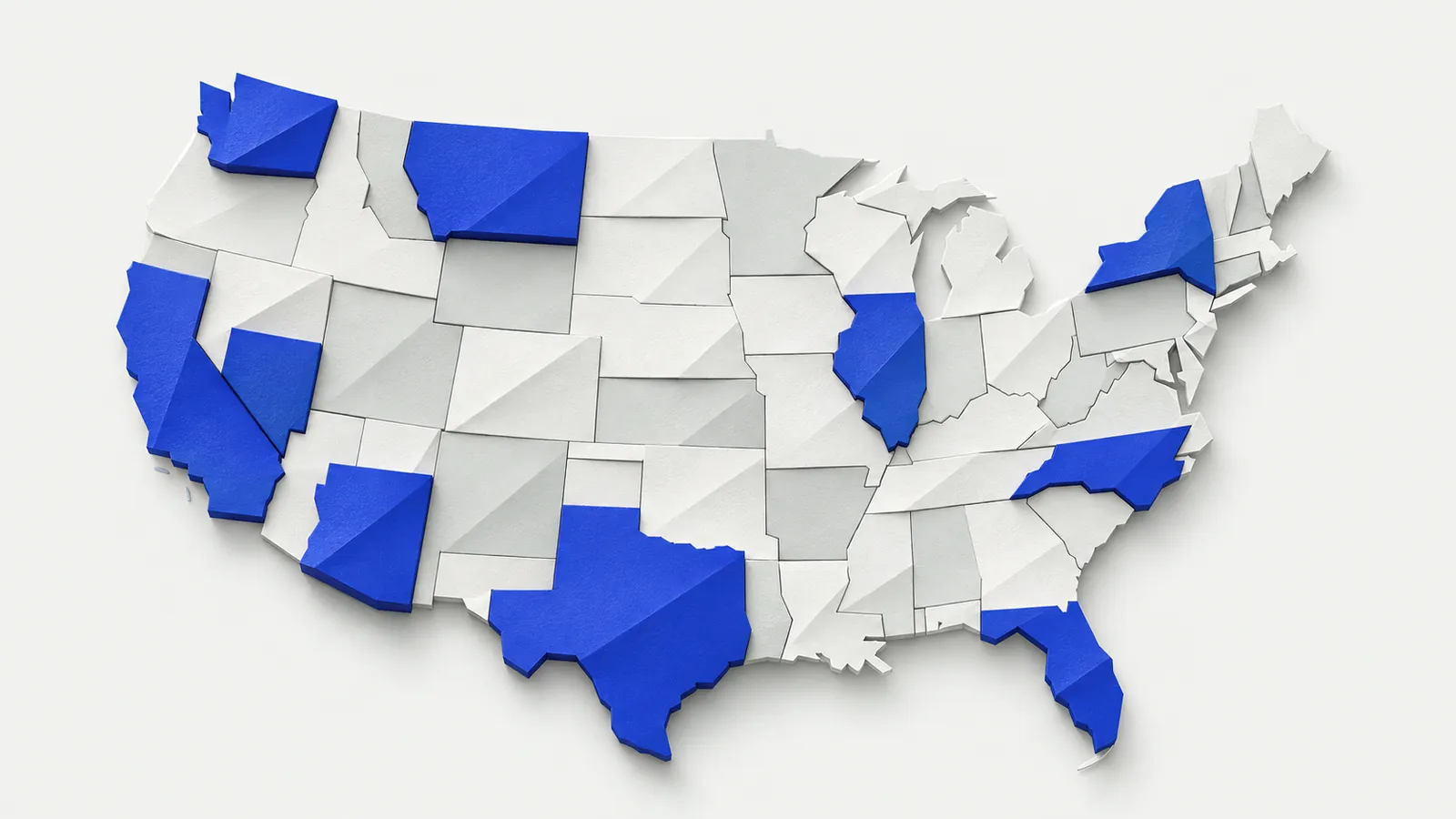
Commercial financing disclosure laws require funders, and in some states brokers, to give small business owners a standardized cost disclosure before a deal closes. As of November 2026, eleven states have one in force (California, New York, Utah, Virginia, Georgia, Florida, Connecticut, Kansas, Missouri, Texas and Louisiana) and Vermont's starts July 1, 2027. Only California, New York and soon Vermont require an estimated APR.
This tracker is part of our compliance series under the TCPA consent guide for business loan leads. Calling and texting rules govern how you reach an owner; these laws govern what you hand them once you make an offer.
The tracker (as of November 2026)
Each row was checked against the statute or regulator text linked in the last column, except Georgia, where the official code did not load and we relied on a law firm summary. Laws change. Confirm the current text before relying on a row.
| State | Law and citation | Effective | Who it covers | What it requires | Source |
|---|---|---|---|---|---|
| California | Commercial Financing Disclosures, Fin. Code 22800 to 22807 (SB 1235, 2018); 10 CCR 900 to 956 | Disclosures Dec. 9, 2022; SB 362 rate rules Jan. 1, 2026; AB 2116 license July 1, 2028 | Providers extending offers of $500,000 or less to businesses principally directed or managed from California; brokers have duties under 10 CCR 952 and, from July 1, 2028, need a DFPI license under AB 2116 | Signed disclosure before consummation with estimated APR, finance charge, total payment, payments, term and prepayment; brokers must pass on the funder's disclosure unaltered | leginfo |
| New York | Commercial Finance Disclosure Law, Fin. Serv. Law 801 to 812; 23 NYCRR Part 600 | Aug. 1, 2023 compliance date under Part 600 | Providers, including brokers who solicit and present offers for a third party; deals up to $2.5 million; broker duties in 23 NYCRR 600.21 | Signed disclosure with estimated APR, finance charge, total repayment, term, payments, fees, prepayment and collateral; broker compensation stated in writing | NY Senate |
| Utah | Commercial Financing Registration and Disclosure Act, Utah Code 7-27-101 et seq. (SB 183, 2022) | Jan. 1, 2023 | Providers doing more than 5 Utah deals a year; deals up to $1 million; covers loans, credit lines and receivables purchases | Annual registration with the Department of Financial Institutions; dollar-cost disclosure before consummation; no APR | Utah Legislature |
| Virginia | Sales-Based Financing, Va. Code 6.2-2228 to 6.2-2238 (HB 1027, 2022) | July 1, 2022; registration by Nov. 1, 2022 | Sales-based financing providers and brokers; recipients with a principal place of business in Virginia; deals up to $500,000 | Registration with the State Corporation Commission; signed disclosure at the offer, including broker compensation; confession of judgment clauses barred; no APR | Virginia Code |
| Georgia | O.C.G.A. 10-1-393.18 et seq. (SB 90, 2023) | Jan. 1, 2024 | Providers doing more than 5 Georgia deals a year; deals up to $500,000 | Dollar-cost disclosure before consummation; brokers barred from advance fees and false statements; no registration; no APR | Mayer Brown (secondary) |
| Florida | Commercial Financing Disclosure Law, Fla. Stat. 559.961 to 559.9615 (HB 1353, 2023) | Jan. 1, 2024 | Providers doing more than 5 Florida deals a year; deals up to $500,000 | Dollar-cost disclosure at or before consummation; brokers barred from advance fees and must show a real address and phone in ads; no registration; no APR | Florida Legislature |
| Connecticut | Conn. Gen. Stat. 36a-861 to 36a-872 (Public Act 23-201) | July 1, 2024; registration by Oct. 1, 2024 | Sales-based financing of $250,000 or less; providers and brokers | Registration with the Banking Commissioner; signed disclosure including broker compensation; a specific offer may not be revoked or changed until midnight of the third calendar day, with underwriting exceptions; no APR | CGA |
| Kansas | Commercial Financing Disclosure Act, K.S.A. 75-783 to 75-787 (SB 345, 2024) | July 1, 2024 | Providers doing more than 5 Kansas deals a year; deals up to $500,000 | Dollar-cost disclosure; brokers barred from advance fees; no registration; no APR | Kansas Revisor |
| Missouri | RSMo 427.300 (SB 1359, 2024; amended 2025) | Statute Aug. 28, 2024; disclosure and broker registration Feb. 28, 2025 (the statutory default if the Division of Finance does not make rules) | Providers doing more than 5 Missouri deals a year; deals up to $500,000 | Dollar-cost disclosure; brokers register with the Division of Finance each year and post a $10,000 bond; no APR | Missouri Revisor |
| Texas | Commercial Sales-Based Financing, Fin. Code ch. 398 (HB 700, 2025); 7 TAC ch. 86 | Sept. 1, 2025; registration by Dec. 31, 2026 | Sales-based financing providers and brokers; disclosure for offers under $1 million | Registration with the OCCC through NMLS; signed disclosure including broker compensation; confessions of judgment void; automatic debits limited without a perfected first-priority security interest; no APR | Texas Legislature |
| Louisiana | La. R.S. 9:3137.10 (HB 470, Act 198 of 2025) | Aug. 1, 2025 | Revenue-based financing transactions; no dollar threshold or exemptions in the section | Dollar-cost disclosure at or before consummation; states the deal is "not a transaction for the use, forbearance, or detention of money" and its charges are not interest; no enforcement clause; no APR | Louisiana Legislature |
| Vermont (enacted, not yet in force) | 8 V.S.A. 2247 (H.648, Act 142 of 2026) | July 1, 2027 | Sales-based financing and factoring under $1 million; people who solicit or present offers for others need a loan solicitation license | Lender license for providers; estimated APR disclosure; confessions of judgment void; automatic debits limited | Vermont Legislature |
How the laws differ in practice
The table hides the three questions a broker actually asks before sending terms.
Does the offer need an APR? Only in California and New York today, and Vermont from July 1, 2027. California's 2025 law (SB 362) goes further: from January 1, 2026, a provider that states a charge, pricing metric or financing amount during the application process after making a specific offer must also state the APR, and may not use "interest" or "rate" in a misleading way. Quoting a factor rate alone to a California owner is now a risk.
Do I have to register? Five states register someone today:
| State | Who registers | With whom | Renewal |
|---|---|---|---|
| Utah | Providers | Department of Financial Institutions | Expires Dec. 31 each year |
| Virginia | Providers and brokers | State Corporation Commission | Annual fee by Sept. 15 |
| Connecticut | Providers and brokers | Banking Commissioner | Annual fee by Sept. 15 |
| Missouri | Brokers only, with a $10,000 bond | Division of Finance | Renewal by Jan. 31 |
| Texas | Providers and brokers | OCCC, through NMLS | Annual; the statute and the OCCC page give different renewal windows, so check the OCCC |
What can a broker never do? Florida, Georgia and Kansas bar brokers from taking advance fees. Virginia bars confession of judgment clauses and Texas voids them. Vermont will void them from July 1, 2027, and California will bar taking one before default when AB 2116 takes effect in 2028.
What is coming next
| State | Measure | Status as of November 2026 |
|---|---|---|
| Texas | Registration deadline for existing providers and brokers | Dec. 31, 2026 |
| Vermont | Act 142 licensing and disclosure rules | Takes effect July 1, 2027 |
| California | AB 2116 (Chapter 823, 2026): commercial financing under the California Financing Law, license for providers and brokers, brokers must post average and maximum APRs on their website | Most provisions Jan. 1, 2028; license required July 1, 2028 |
| Connecticut | HB 5211 (2026), APR and removal of the $250,000 cap | Passed the House; no final Senate vote; not enacted |
| Maryland | SB 881 (2026) | Passed the Senate; not enacted |
| New Jersey | S1760 (2026) | Introduced; in committee |
| Illinois | SB 260 (2025) | Not enacted |
| New York | S3177 (2025), commercial financing licensing; S1726, usury limits for MCAs | S3177 passed the Senate Banks Committee and sits in Finance; S1726 is in Judiciary; neither enacted |
North Carolina, Pennsylvania, Oklahoma and Arizona had no comparable bill that we could find for 2025 or 2026.
What this means for a broker working leads
These laws attach at the offer, not at the lead. Buying or calling a lead does not trigger them. Presenting a specific offer does, and so does closing. In practice:
- Know the owner's state before you quote. The test is usually where the business is principally directed or managed, or its principal place of business, not where you are.
- Pass the funder's disclosure through unaltered in California and New York, before you present the offer, and keep evidence of when you sent it.
- Register where you must before you broker a deal there: Virginia, Connecticut, Missouri and Texas today.
- Disclose your compensation where required: New York (by regulation), Virginia, Connecticut and Texas include broker compensation.
- Keep records. In California (10 CCR 952) and New York (23 NYCRR 600.21), brokers must send the funder proof of when the disclosure went out, and funders keep those records for four years. Keep your own copies too.
California and New York, the two APR states in force today, each have a full explainer: California commercial financing disclosures and New York's Commercial Finance Disclosure Law. If you are setting up a brokerage that buys leads, our page for brokers and ISOs explains how we deliver them.
Rules vary by state and change often; this tracker reflects our reading as of November 2026, and it is not legal advice, so check current law with counsel before you quote terms.
Sources
- 1.California Financial Code Division 9.5, Commercial Financing Disclosures (22800 to 22807), California Legislative Information
- 2.New York Financial Services Law Article 8, Commercial Financing, New York State Senate
- 3.Utah Code Title 7, Chapter 27, Commercial Financing Registration and Disclosure Act, Utah State Legislature
- 4.Code of Virginia Chapter 22.1, Sales-Based Financing, Virginia General Assembly
- 5.Georgia enacts commercial finance disclosure law (secondary source), Mayer Brown
- 6.Florida Statutes Chapter 559, Part XIII, Commercial Financing Disclosure Law, Florida Legislature
- 7.Connecticut General Statutes Chapter 669 (36a-861 to 36a-872), Connecticut General Assembly
- 8.Kansas Statutes 75-783 to 75-787, Commercial Financing Disclosure Act, Kansas Office of Revisor of Statutes
- 9.Missouri Revised Statutes 427.300, Missouri Revisor of Statutes
- 10.Texas HB 700 (89th Legislature), enrolled, adding Finance Code Chapter 398, Texas Legislature
- 11.Commercial Sales-Based Financing registration, Texas Office of Consumer Credit Commissioner
- 12.Louisiana R.S. 9:3137.10, Revenue-based financing transaction, Louisiana State Legislature
- 13.Vermont H.648 (Act 142 of 2026), Vermont General Assembly
- 14.California AB 2116 (2026), Commercial financing, chaptered, California Legislative Information
Checked against these sources on November 25, 2026. Spotted an error? Tell us.
Questions
Which states have commercial financing disclosure laws?
As of November 2026, laws are in force in California, New York, Utah, Virginia, Georgia, Florida, Connecticut, Kansas, Missouri, Texas and Louisiana. Vermont has enacted one that takes effect July 1, 2027. Several other states have considered bills that did not pass. Rules vary and change often, so check current law before you rely on any list.
Do these laws apply to merchant cash advances?
Yes, in every state listed. Some laws cover only sales-based financing, such as Virginia, Connecticut, Texas and Louisiana. Others cover a wider set of commercial financing, including loans and accounts receivable purchases, which is how MCAs are usually structured. Each law has its own exemptions and dollar threshold.
Which states require an APR on an MCA offer?
California and New York require an estimated annual percentage rate on sales-based financing offers, and Vermont will from July 1, 2027. The other states in this tracker require dollar-cost disclosures, such as total repayment and finance charge, without an APR.
Do brokers have to register under these laws?
In some states. Virginia and Connecticut require providers and brokers to register, Missouri requires brokers to register and post a bond, and Texas requires providers and brokers to register by December 31, 2026. Vermont will license brokers from July 1, 2027, and California from July 1, 2028.
Do these laws apply to the lead I buy?
Generally no. These laws attach when a provider or broker presents a specific financing offer or closes a deal, not when you buy a lead. They govern what you do after you reach the owner, which is why brokers need to know them before quoting terms.
More on calling, texting and disclosure rules
Read the full guide



Tell us your credit box. We will tell you what we can deliver.
Share the lead types, states and volume you want. You get a pack quote and the exact fields each lead carries before you pay anything.